
2nd Battalion, 8th Cavalry Regiment 1967-68

|
|
|
|
The Battle of Dak To
| The Battle
of Dak To took place between 3 and 22 November, and was one of the major
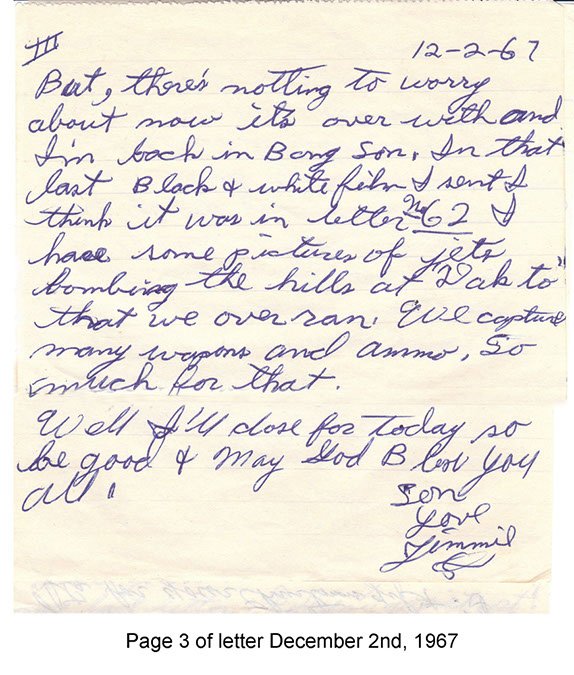
battles of the Vietnam War and one of the bloodiest. In late October, intelligence reports indicated that a large NVA force was preparing to attack US military units and installations at Dak To, located in Kontum Province, and close to the tri-border region where South Vietnam, Laos and Cambodia meet. Dak To lies on a flat valley floor adjacent to a river, and is completely surrounded by mountains with waves of ridgelines and peaks that stretch for many miles in all directions. Some of these ridges and peaks vary between 2500 and 4000 feet in height, and the slopes are very steep and covered with double and triple-canopy trees that are from 100 to 200 feet high and up to four feet in diameter. November was the beginning of the monsoon season, and temperatures in the mountains could reach 95 degrees during the day and drop to as low as 55 degrees at night. An NVA soldier captured during the battle stated that all of October was used to prepare fortified positions on the key ridgelines surrounding Dak To, and carrying munitions and supplies to these positions from Laos. On 2 November, an NVA reconnaissance sergeant surrendered to Allied Forces at Dak To. When interrogated, he provided a detailed and accurate battle plan for the attack on the Dak To – Tan Canh area, which was to be conducted by four infantry regiments and one artillery regiment of the 1st NVA Division. Several other NVA formations participated in this large-scale operation and the total enemy strength was about 12,000 soldiers. The main NVA objective was to compel the US senior headquarters, Military Assistance Command Vietnam (MACV) to send reinforcements to Dak To and then to inflict heavy casualties on these units. Documents captured during the battle show that each NVA infantry regiment was assigned the mission of destroying one US battalion. A captured NVA battalion executive officer had a hand written directive in his pocket stating that he would defend his position to the last man. All of this demonstrates the fierce determination of the enemy and for the NVA leadership in Hanoi, this was an important political confrontation designed to send a crystal-clear signal on the vulnerability of US forces and that the NVA had the capability to launch large-scale attacks against American forces and installations. MACV responded to this enemy encirclement of Dak To – Tan Canh area by deploying several units to reinforce the US 4th Infantry Division. These formations were placed under the operational control of the 4th Infantry Division and included the 173rd Airborne Brigade and our unit, 1st Brigade, 1st Cavalry Division. According to a secret message prepared by MACV Deputy Commander, General Creighton Abrams (date/time 221325Z Nov 67), the 1st Brigade units arrived at Dak To as follows: 1st Battalion, 8th Cavalry arrived on 10 November; 1st Battalion, 12th Cavalry on 11 November; 1st Brigade Headquarters and our battalion, 2nd Battalion, 8th Cavalry on 14 November. The fighting had started on 4 November when US 4th Infantry Division units attacked to secure the ridges to the south of Dak To. Three days later, 173rd Airborne Brigade units pushed west and then southwest, while South Vietnamese Army (ARVN) units pushed north and east. All of these friendly units met stiff resistance from sizeable enemy forces occupying fortified positions on the tops of the peaks and ridges, which confirmed the accuracy of the detailed battle plan obtained from the NVA deserter. In conjunction with these ground attacks, the US initiated a massive bombardment of enemy positions employing all available means. The extent of this massive bombardment is evident from the munitions expended during the Battle of Dak To: 257 B-52 strikes, 2,096 tactical air sorties and a total of 151,000 artillery rounds. It is hard to imagine how anyone could survive such a bombing inferno, however, during the course of the battle we discovered that some of the NVA fortified positions consisted of three concentric trenches around the top of a mountain and they had dug a series of holes deep into the mountain which they used as bomb shelters. There were two
phases to the Battle of Dak To; the first phase was between 4-12 November,
and the second and most violent phase was from 17-22 November. According to
General Abrahm’s message, our battalion
arrived
in the area on 14 November, however, the 4th Infantry Division
Combat After Action Report states that our Battalion arrived on 18 November
(other evidence supports our deployment on 14 November). The latter report
went on to state that our battalion was deployed “into the hills east of TAN
CANH and encountered strong enemy defences. The battalion operated in the
area six days, again blasting the enemy out”.
19 November will always be remembered by the many relatives who lost a loved one on this date at Dak To and by the many veterans who participated in this battle. The strongest enemy resistance was on the infamous Hill 875, located southwest of Dak To where two battalions of the 173rd Airborne Brigade, the 2nd Battalion and 4th Battalion, 503rd Infantry Regiment, fought for several days to seize this hilltop. The attack began on 19 November and Hill 875 was finally secured on Thanksgiving Day, 23 November. Both battalions suffered very heavy casualties and the fighting was so violent that the infantry companies were calling in artillery and air strikes dangerously close to their own positions. The casualty figures for these two battalions were158 killed and 402 wounded in action.
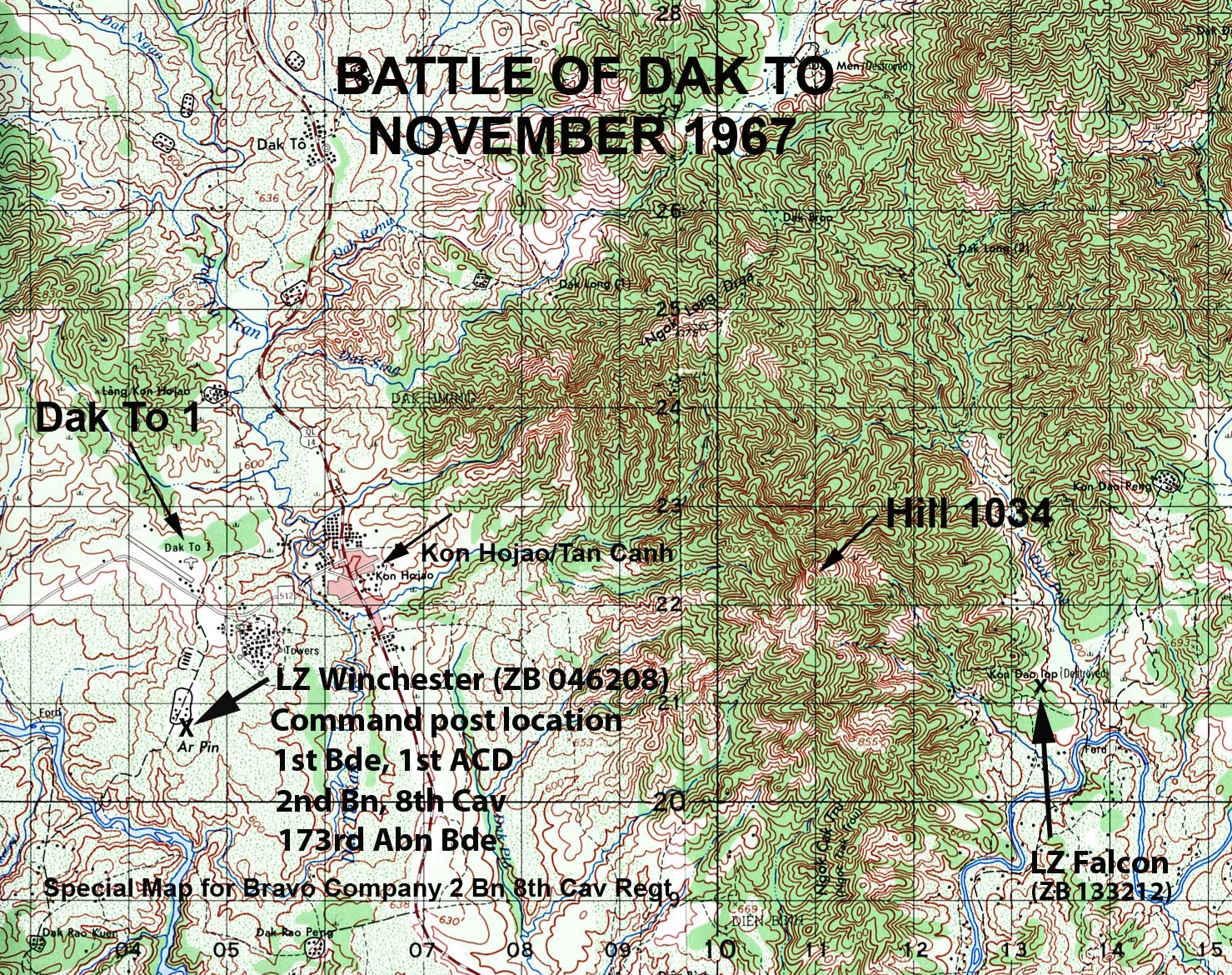
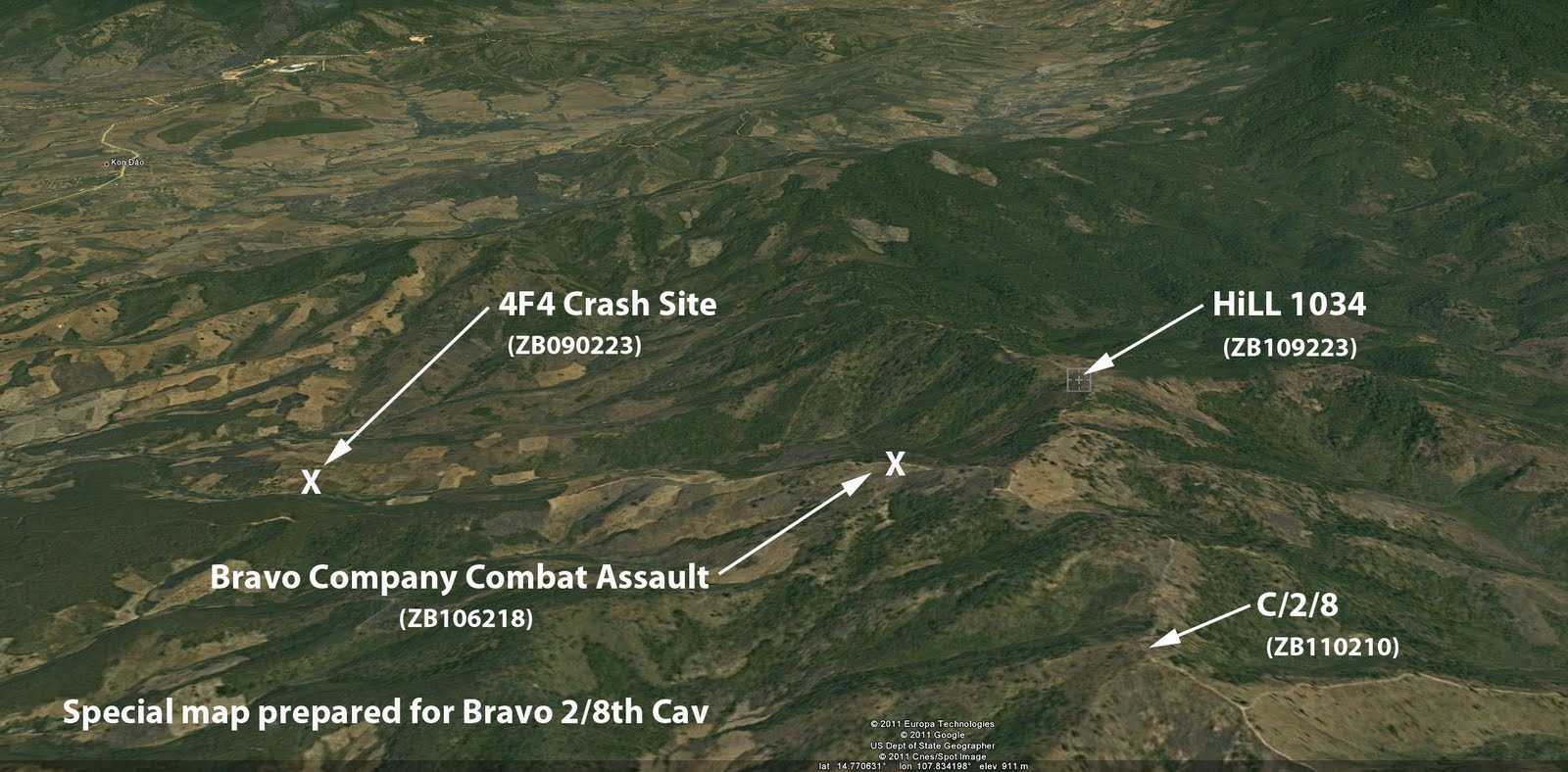
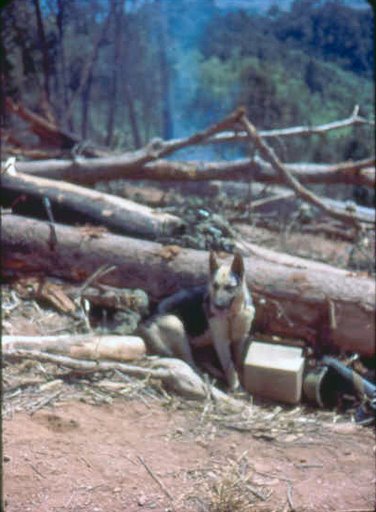
Bravo Company was also engaged in a fierce firefight on Hill 1034 on 19 Nov, but first some relevant background details from the 1st Bde, 1st ACD, Combat After Action Report, dated 1 Dec 1967. The 1st Brigade Task Force that deployed to Dak To consisted of two battalions; 2nd Bn 8th Cav Regt and 1st Bn 12th Cav Regt. Major supporting units included; 2-19th Arty(-), A/2-20 Arty (ARA), B/229th AH Co(-), and 228th ASH Co(-). Other supporting units included platoons or detachments of MPs, scout dogs, pathfinders, engineers, Military Intelligence, Tactical Air Control Party, and several others. 1st Brigade combat units deployed to Dak To on 14 Nov by C-130 from LZ English. A total of 37 C-130 sorties were required to move combat units and their essential equipment, while logistical and other units moved by road with an overnight at An Khe. On 15 Nov, the 2-8th Cav initially released two companies to the 1st Bde, 4th Inf Div for the defense of Dak To. On 16 Nov, the 2-8th Cav Command Post moved from Kontum to the Dak To area (LZ Winchester), resumed control of their rifle companies and operated under the 1st Bde, 4th Div to assist in the defense of Dak To. D Co worked generally to the south, B Co to the north and C Co to the east of Dak To. C Co made contact with estimated NVA company at ZB 110210 and conducted a two day battle finally securing the hill top. A Co, 2-8th Cav, remained under the operational control of the 1st Bde, 1st ACD, and secured the proposed forward CP location at LZ Polly. It was determined on 16 Nov that the proposed forward CP location for the 1st Bde , 1st ACD, would not be at LZ Polly but instead be at LZ Winchester (ZB 046208), which was the location for the 2-8thCav CP and the 173d Abn Bde Rear CP. On 19 Nov, the 2-8th Cav (-) returned to the operational control of the 1st Bde, 1st ACD, and the battalion was assigned an area of operation in the general vicinity of where C Co had contact with enemy forces at ZB110210. This area of operation was called the WHITEHORSE AO. On 19 Nov, B Co conducted a combat assault on a narrow ridgeline at ZB 106218 with the mission of securing Hill 1034, located at ZB 109223. Bravo Company was not aware of any intelligence indicating that enemy forces had established extensive fortifications on Hill 1034. For their defense of Hill 1034 and to survive massive bombardments by US artillery and air-strikes, enemy forces had established a horseshoe defense consisting of an elaborate bunker system with connecting tunnels and the whole complex was skillfully camouflaged. Immediately prior to the beginning of this firefight, the lead elements of Blackfoot Platoon had reached the southern tip of Hill 1034 and had started occupying hasty defense positions, while the remainder of Bravo Company continued to close on Hill 1034. It is highly likely that Blackfoot approached Hill 1034 from one direction, while Cheyenne was the lead platoon for the remainder of Bravo Company who approached Hill 1034 from another direction. The command group with Captain Decker and his radio operator, SP4 Fowler, was located with Cheyenne.
This was the situation when Bravo came under
intense and accurate fire from enemy forces occupying fortified positions on
Hill 1034. It all started abruptly when enemy forces engaged Blackfoot
from well-camouflaged fighting positions and our first casualty
was Lieutenant Rodreick. In the course of a short period, Bravo Company
sustained 10 casualties, representing 9% of our field strength. Among those
killed in action was Captain David Decker, Commanding Officer of Bravo
Company; Specialist William Fowler, Captain Decker’s radio operator; and
Lieutenant Ronald Rodreick, Blackfoot Platoon Leader. Specialist Thomas
Olearnick, who was the pointman for Cheyenne on the approach to Hill
1034, was listed as missing in action but his status was later changed to
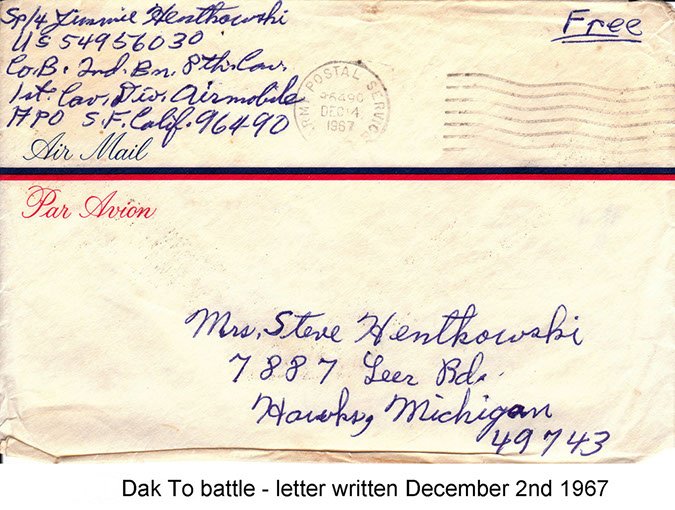
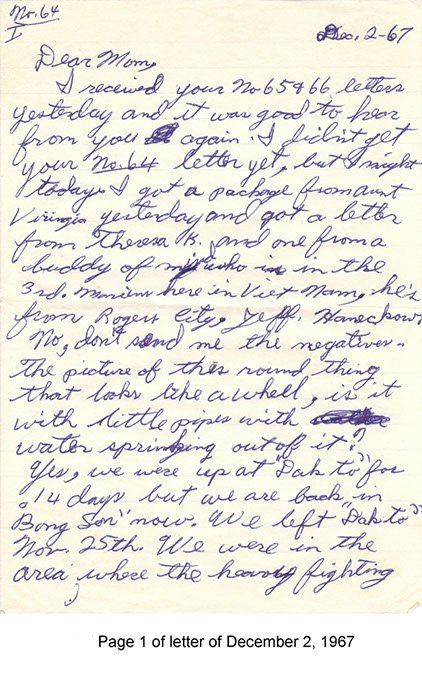
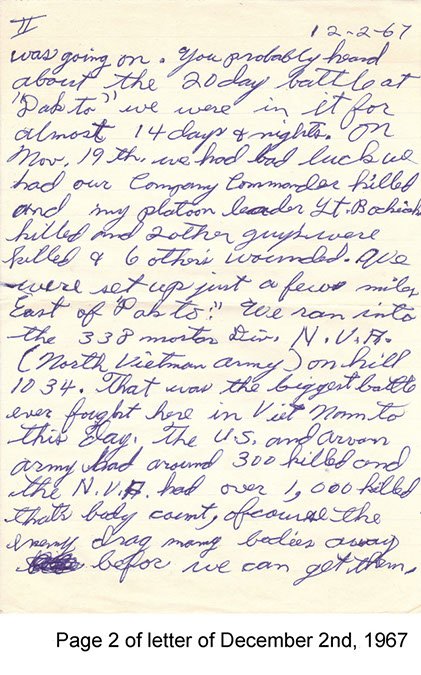
“died while missing”. Based on a letter written home by one of our troopers,
Bravo Company had a total of six troopers wounded during this action and
they were medevaced by helicopters. Aztec Platoon was in a position to
provide covering fire while Blackfoot and Cheyenne withdrew from the top
of Hill 1034 with our casualties. The assault on Hill 1034 was suspended
while we evacuated all of our casualties and it was also necessary to
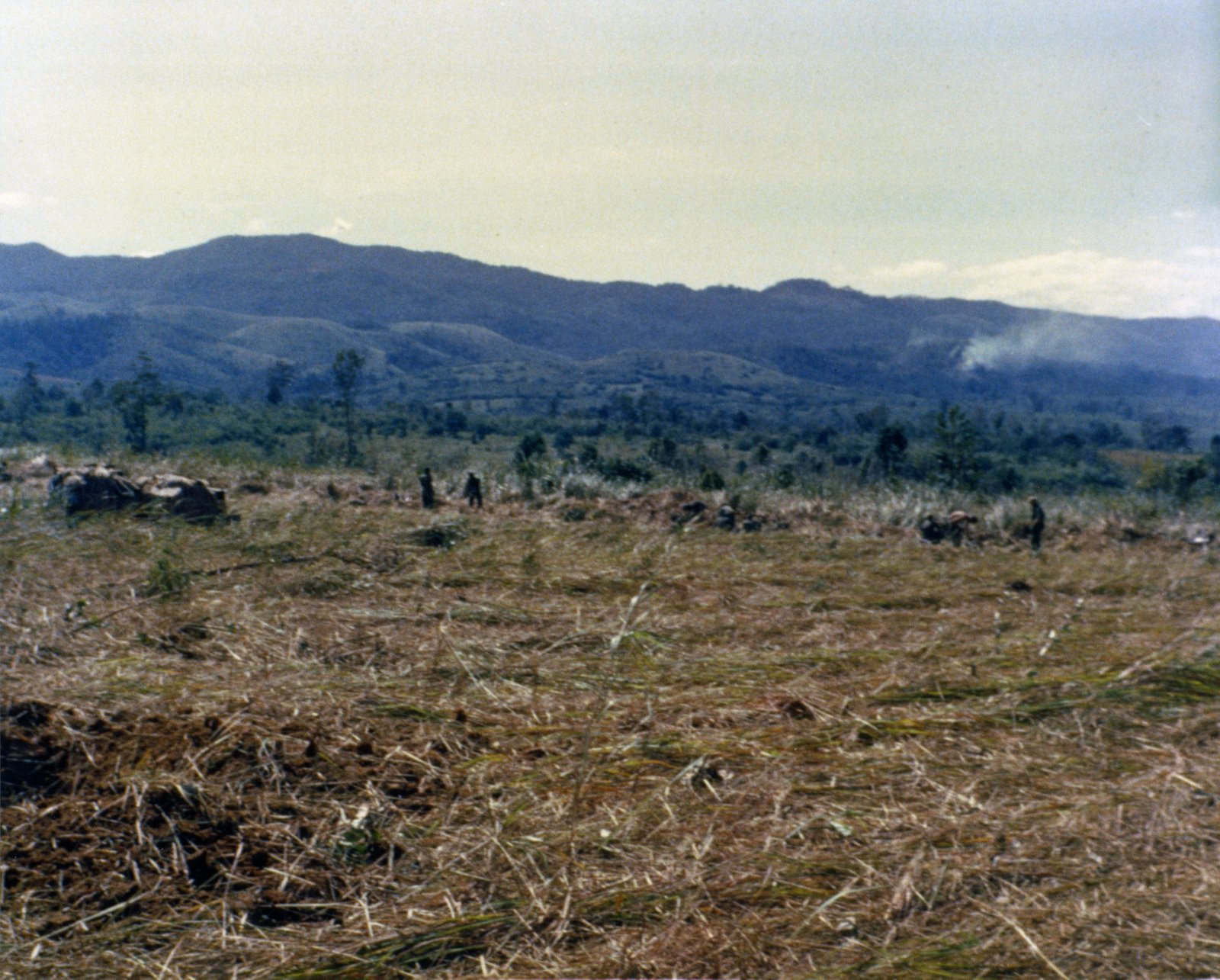
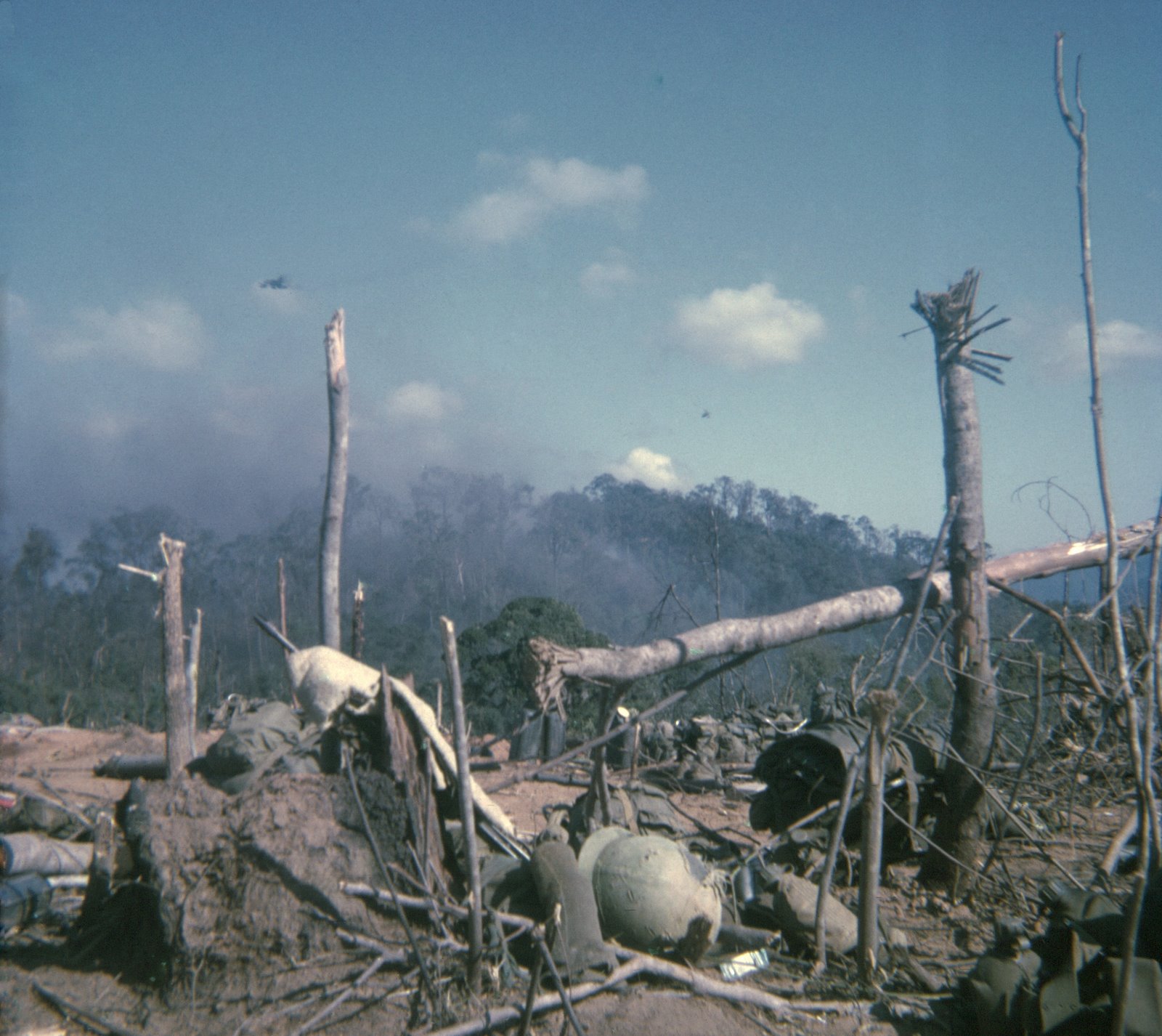
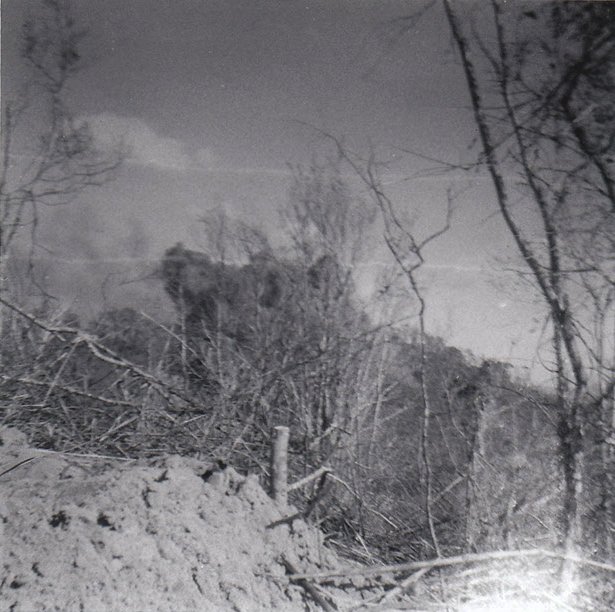
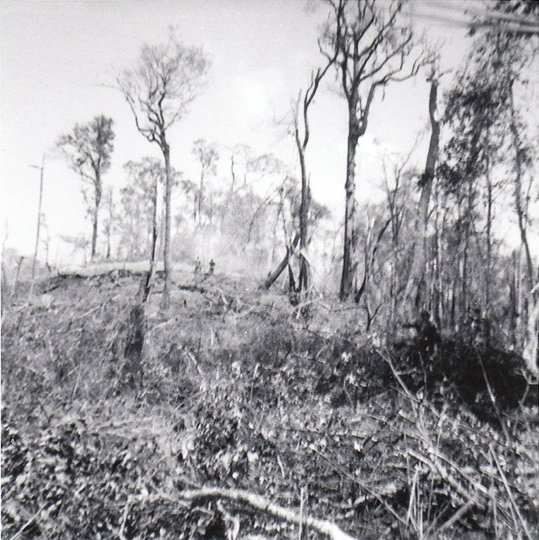
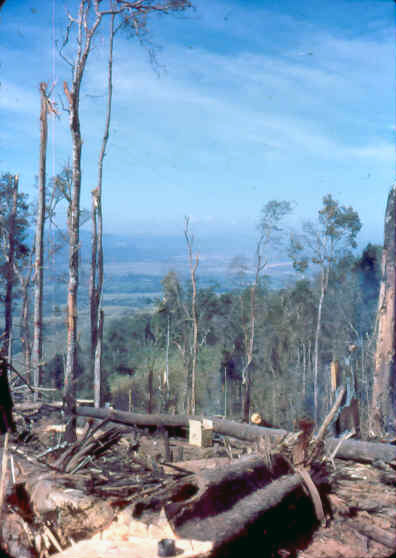
reorganize due to the loss of several leaders. During the night of 19-20 Nov, a F4F aircraft conducting an air strike on Hill 1034 received ground to air fire and crashed in the vicinity of ZB 09022. One of the pilots ejected safely and ARA gunships covered his extraction immediately after the crash. D Co returned to 2-8th Cav control on 20 Nov and conducted a combat assault to secure the wreckage of the downed aircraft, recover the body of the pilot who failed to eject and to extract sensitive items of equipment. Early in the morning of 20 November, Captain Peter O’Sullivan assumed command of Bravo Company and landed at the company location at ZB 110210 with two replacement platoon leaders; Lt. Thomas Beach (Cheyenne) and Lt. Gus Pappas (Mohawk). On the same date, Lt. Thomas De Young (Blackfoot) was transferred from Charlie to Bravo Company to provide Bravo Company with a combat experienced platoon leader. Another replacement platoon leader, Lt. Charles Ready (Aztec), joined Bravo Company sometime during the afternoon of 19 Nov. The former platoon leader of Aztec, Lt. Bill Berry, was assigned duties as Bravo Company Executive Officer on 16 November. Another former platoon leader (Cheyenne) of Bravo Company, Lt. Alfred Lehman, was assigned to our Battalion Headquarters Company with an effective date of 21 November. The following two photos on the bombing of Hill 1034 were taken during the morning of 20 Nov from our location at ZB 110210 and before we assaulted the hill.
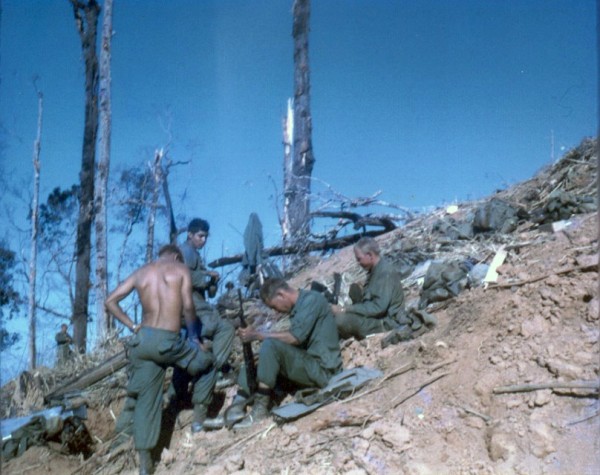
The following photograph was taken of shortly after we occupied Hill 1034 on 20 November 1967, and these troopers portray the anguish and sorrow that affected all of the members of Bravo Company.
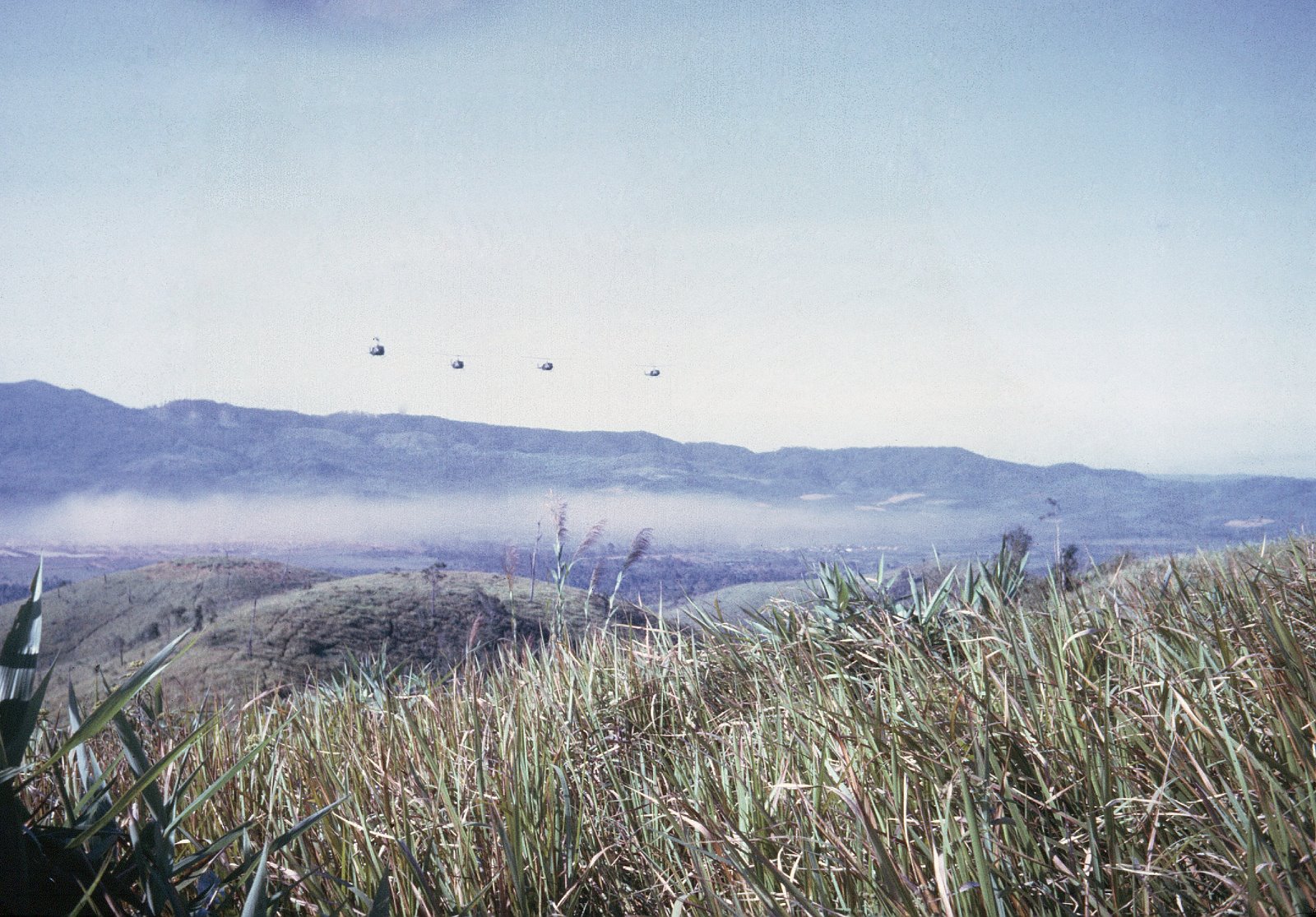
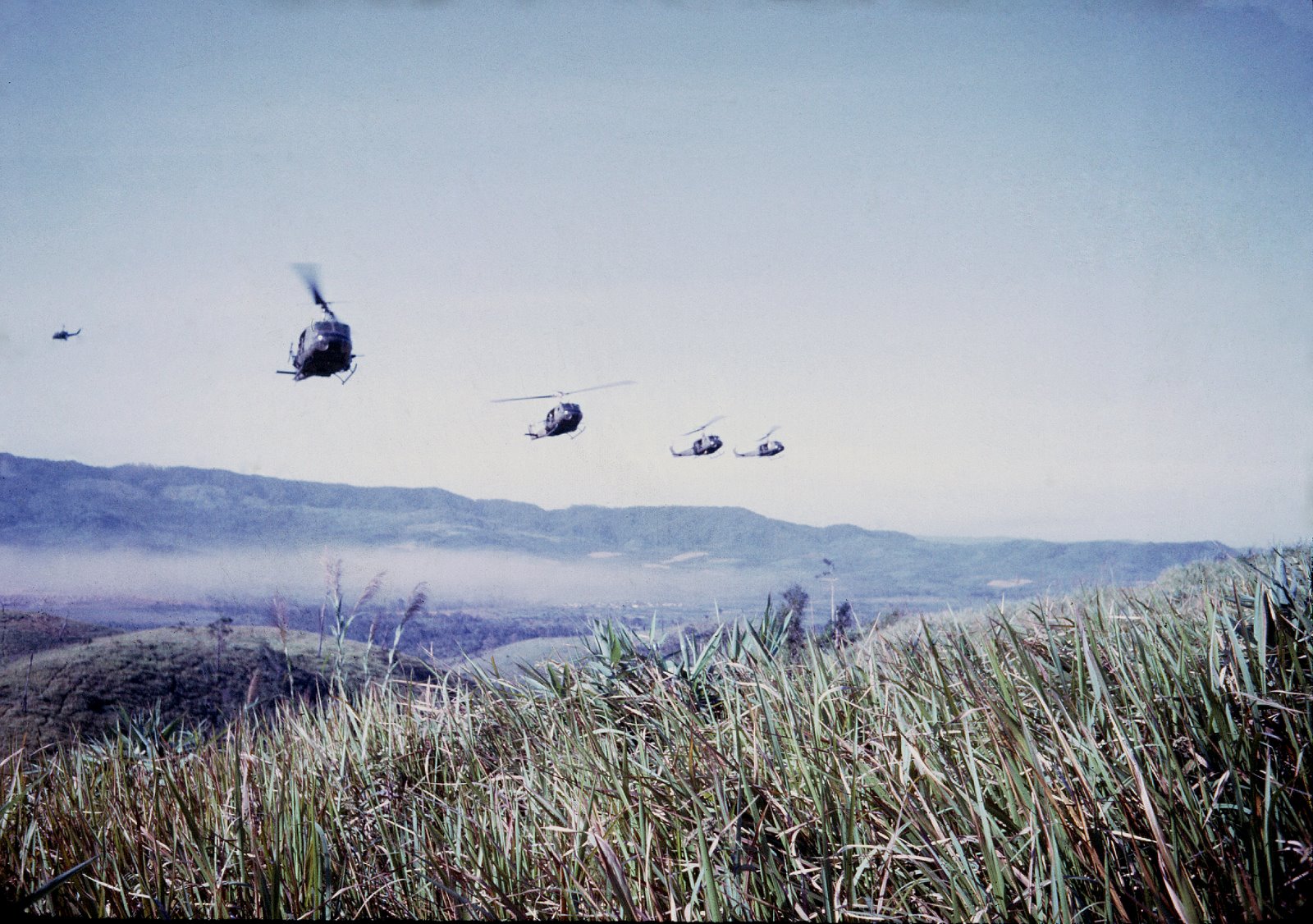
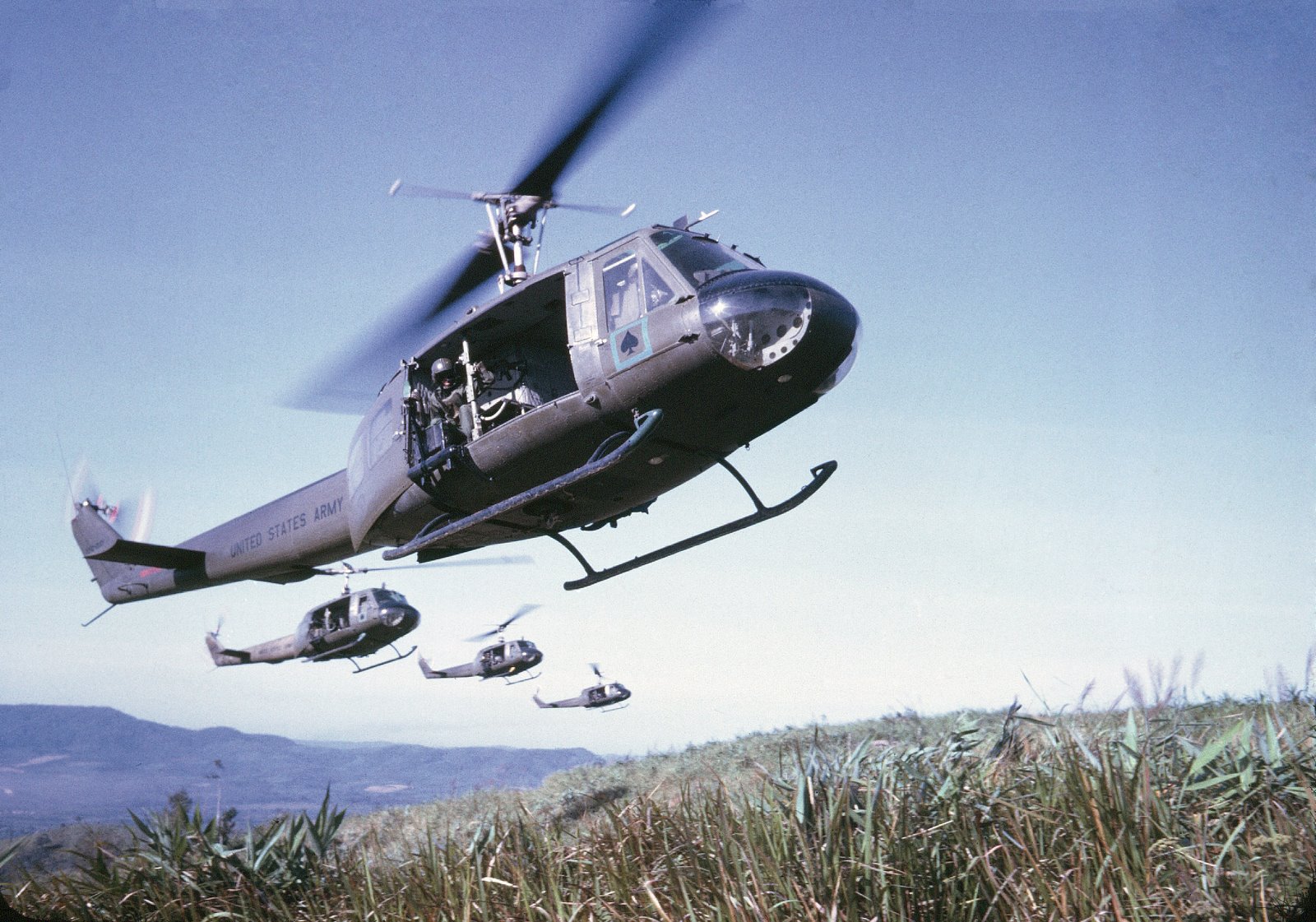
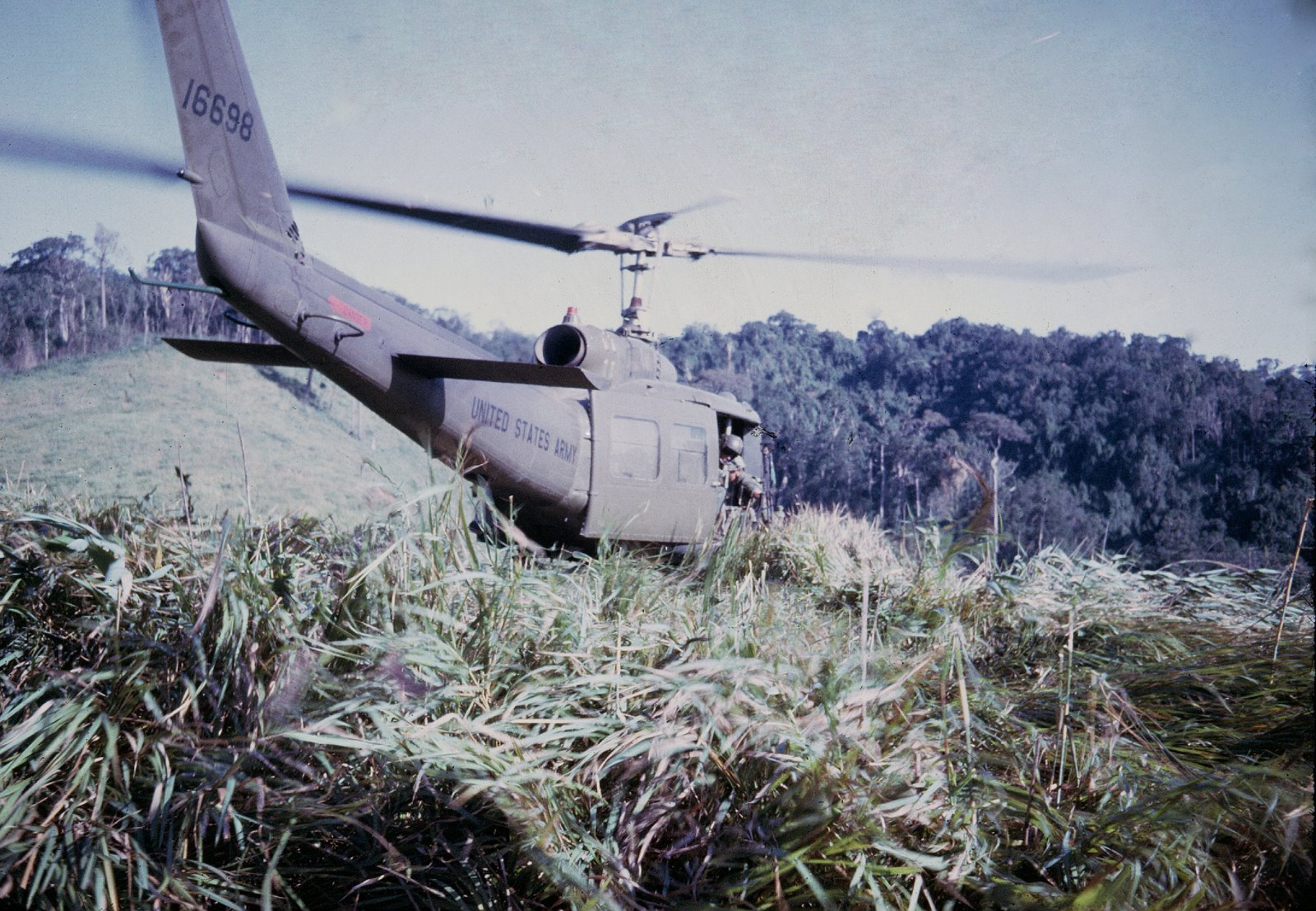
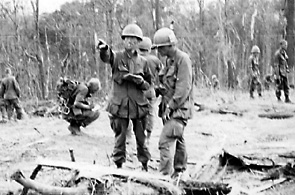
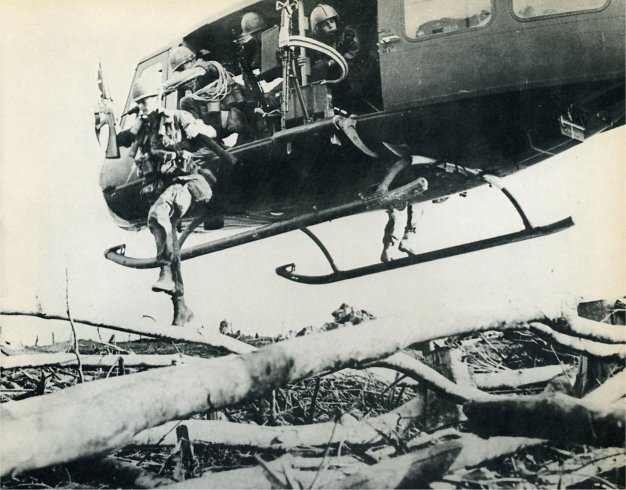
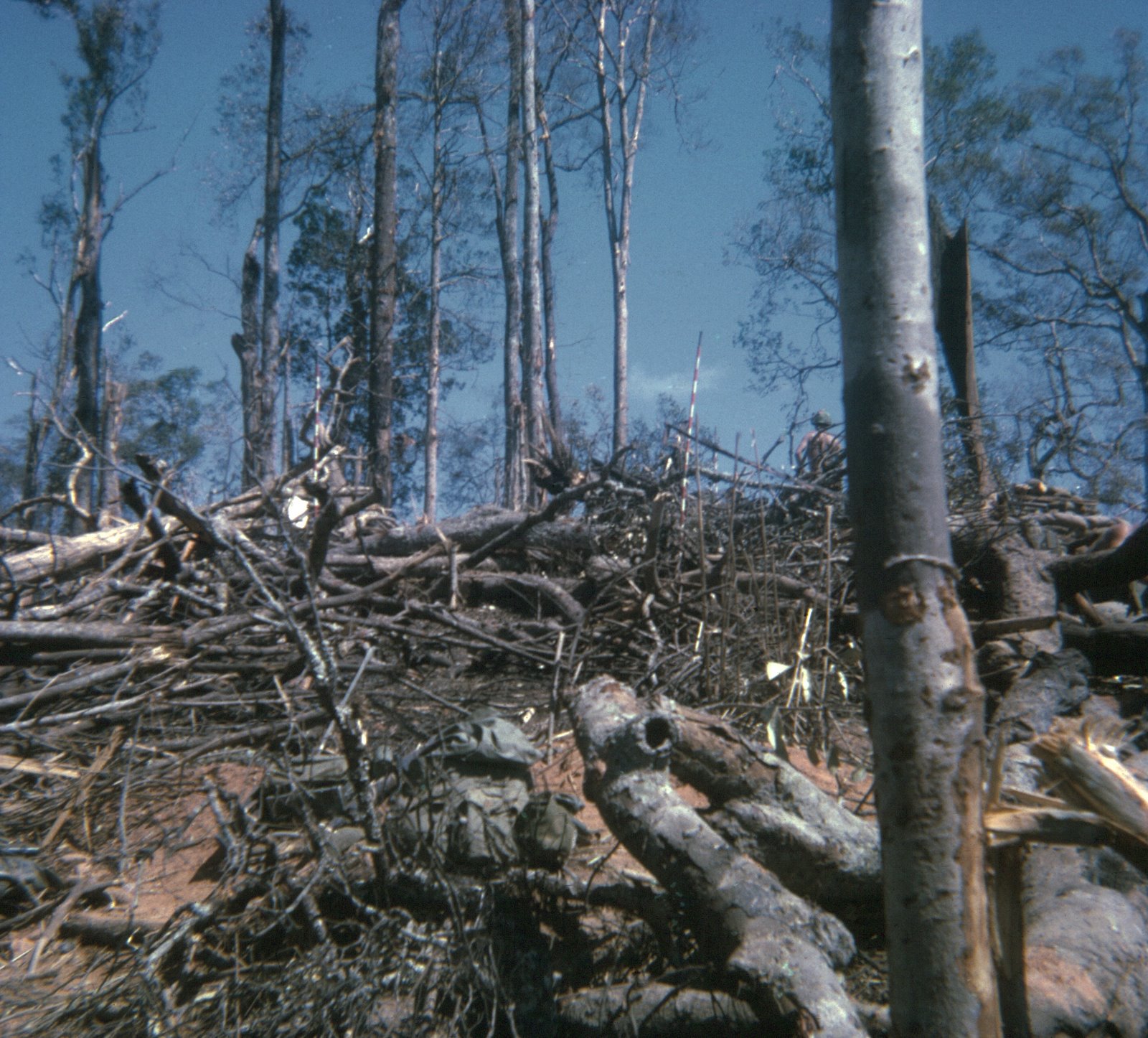
The difficulties of conducting combat assaults in the hills surrounding Dak To with double and triple-canopy trees is clearly evident from this photograph.
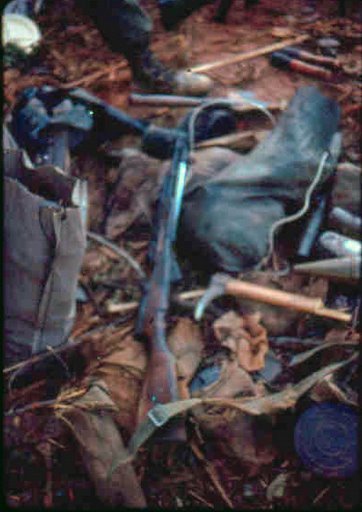
In the afternoon of 20 Nov and proceeded by a devastating air and artillery barrage, Bravo Company completed the assault of Hill 1034. We spent most of the evening and the following two days clearing the extensive enemy bunker complex surrounding Hill 1034, and collecting captured NVA weapons and a large supply of artillery and mortar ammunition, some of which had markings showing that they were manufactured in Russia. According to information recorded in a letter home, one of the enemy units occupying Hill 1034 was an NVA mortar unit with an identification number of 338. This information was obtained from enemy documents found in the bunkers. Another dangerous situation confronting us was the presence of numerous unexploded cluster bombs that were scattered all over Hill 1034 and an Explosive Ordinance Team spent many hours blowing them up. The entire ridgeline was cleared and secured by 21 Nov. On 23 or 24 Nov, Bravo was assigned the mission of securing LZ Winchester with three platoons, and one platoon (Blackfoot) was sent to Kontum to secure the 1st Bde, 1st ACD, rear command post. On Thanksgiving Day, 23 November, we received the news that the battle of Dak To was over and the enemy had probably returned to their sanctuaries in Laos and Cambodia. Bravo Company (minus Blackfoot) was on another hilltop, called LZ Winchester, and late in the afternoon, choppers arrived with our Thanksgiving dinner, consisting of turkey with all the trimmings. Although we enjoyed our meal, there was a noticeable sadness among the troops as if they were silently thinking of their friends and colleagues who were not present.
On 23 Nov,
the WHITEHORSE AO was expanded to the north and east to allow for pursuit to
the northeast. A firebase, LZ FALCON (ZB 133212), was opened on 23 Nov. On
24 Nov, A and C Co’s combat assaulted to the northeast with no significant
findings. Both companies were subsequently extracted to LZ WINCHESTER on 24
Nov in preparation for the return of the 1st Bde, 1st
ACD, to the Pershing AO on 25 Nov.
NVA
casualties during the Battle of Dak To were between 1200-1455 killed in
action and it is likely that the figure for NVA wounded in action would be
somewhere around 3000. Provoked by these high casualties, a NVA officer
called Dak To a “useless and bloody battle”. US casualties during the Battle
of Dak To were 289 killed in action, 985 wounded and 16 missing in action.
Forty helicopters, two C-130 Hercules and one a F4F aircraft were destroyed
by enemy fire. Because of the steep slopes and triple-canopy trees, there
was a serious lack of suitable sites for landing helicopters and this meant
that most troop movements had to be conducted on foot. There is no doubt
that the scarcity of suitable landing sites made it very difficult to
conduct airmobile operations in the Dak To area, and this greatly reduced
not only our combat effectiveness but also our combat advantage over our
opponents. In fact, there are numerous cases where the Battle of Dak To was
a traditional “one on one” infantry contest and where we assaulted hills
just like the US infantry did during the Korean War. Most military experts
would agree that the battles of Dak To in November and Tam Quan in December
were preliminary battles to the Tet Offensive in January 1968.
|
|||||||||||||||||||||||||||||||
Dropdown menu by http://www.milonic.com
http://www.milonic.com/removelink.php